
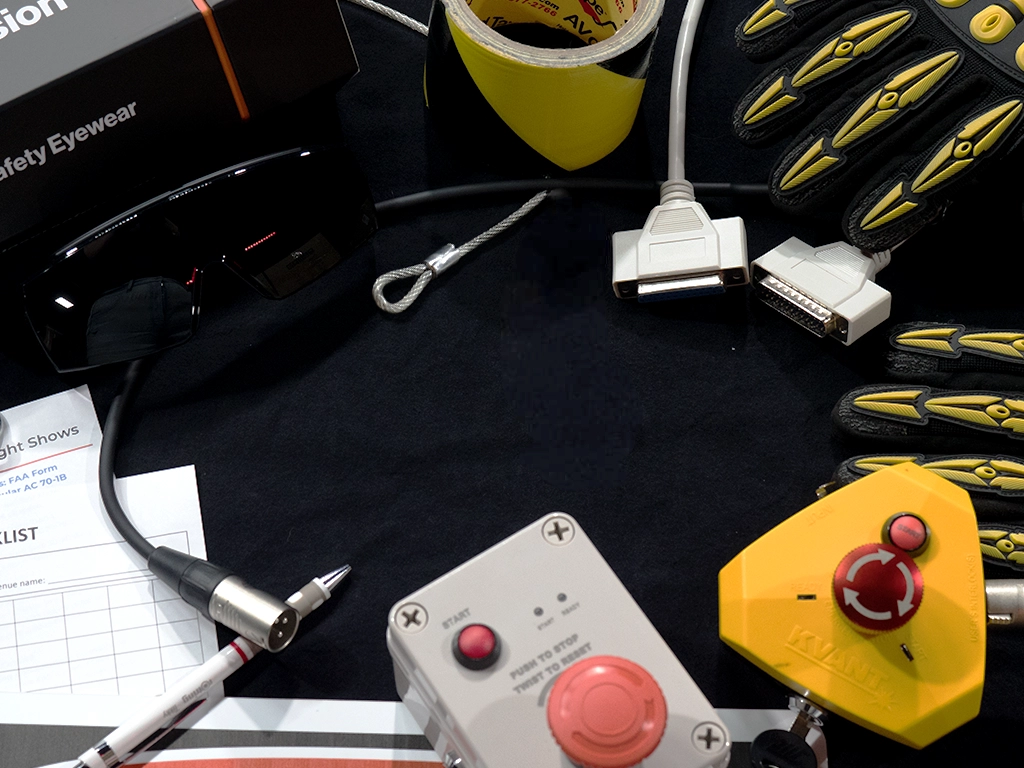
Laser Show Safety

Laser Safety Guide Video
Laser safety is of paramount importance anytime you are working with laser systems. Here you can learn the basics and help do your part to keep laser displays safe for everyone to enjoy! If you haven’t already, we would highly suggest watching our Laser Safety Guide Video, and then after, taking our Laser Safety Guide Quiz by clicking the button below!
Laser Safety QuizGeneral Safety Tips
1. Do not shine the laser beam into people’s eyes without the proper training certification. You might think this would be common sense, but not everyone has learned about the dangers of laser projectors, so it’s very important to be cognizant of your surroundings and ensure that you’re projecting in a safe area.
2. Watch out for reflective surfaces. Objects such as windows, mirrors, glass, artwork, or any surface that a laser beam could potentially reflect off of is considered a hazard, so it’s wise to inspect the location you are planning on terminating the laser projector’s beams on to ensure your laser beams aren’t reflecting.
3. The 3-Meter Rule. In the United States, it’s a federal law that any laser beams being projected must be at least 3 meters (or 10 feet) above the the highest point where the audience can, or might potentially stand. The only exception to this rule is during Audience Scanning shows, which are a specially designed type of laser show that allows lasers to safely project into the audience. However, there are a lot of extra steps that are required to perform an Audience Scanning laser show. If you’re interested in creating one yourself, click the Audience Scanning tab in our FAQs below to learn more.
4. Do not project a laser into the sky without the proper clearance. It is extremely dangerous to project any sort of laser beams into the sky as you could potentially hit an aircraft. Unless you have gone through the proper steps to get clearance from the FDA and FAA, you will need to designate a surface for your laser to terminate on. An area to terminate a laser could be a tree-line, building, wall, or essentially any object that allows you to safely terminate the beam ensuring safe operation during the show.
5. Wear laser safety glasses during setup, servicing, or alignment. You never know when something could go wrong and the last thing you want to do is permanently damage your vision, so you should always make sure to wear laser safety glasses when working with a laser system.
Common Questions
What is the Beam Attenuation Map (BAM)?
Beam Attenuation Map (or BAM for short), is our patented standard safety feature inside all of Pangolin’s software. The BAM allows you as a laser operator to define “safe zones” within your projection area. With the BAM, you can reduce laser output by a specified amount (that you decide) in areas that are deemed sensitive.
An example of this would be, you are running a laser show and there is a disco ball hanging from the ceiling and its within the area you’re going to be projecting. Using the BAM, you could reduce the lasers output from 0, to 100% when you are scanning over the disco ball.
The BAM is one of the tools that users have been utilizing to safely record their laser shows and not damage their camera’s sensor. This has given many laser artists the freedom to create beautifully crafted laser shows that they can film (in many ways) and share their art with the world.
If you'd like to learn more about how the Beam Attenuation Map works, you can check out our video linked below in the Pangolin Safety Resources.
Do I need special equipment to Audience Scan?
Audience scanning is very popular, and to many the pinnacle of laser show effects. While we agree that audience scanning is very beautiful, if not done right, it can also be very dangerous. Beams must NOT be on anyone unless special safety measures and procedures are used. In the U.S., the FDA must approve an “audience scanning” variance. Without an audience scanning variance, any audience exposure is likely to be very hazardous and will be illegal.
How often should laser equipment be inspected?
To ensure optimal performance and longevity of your equipment, please follow this tiered maintenance schedule:
Routine Maintenance
Performed Weekly, Monthly, or After Each Event
Aperture Window Cleaning: Gently clean the aperture window using a lint-free cloth and approved optical cleaner to prevent beam distortion or power loss.
Alignment Checks: Verify the beam alignment to ensure accuracy. Small shifts can occur due to vibration or transport.
Deep Cleaning & Inspection
Performed Quarterly or Annually
Fan & Cooling Maintenance: Use compressed air to blow out dust from cooling fans and intake vents. This prevents overheating and extends the life of internal electronics.
Optics Compartment Inspection: Open the optics compartment to check for dust or debris.
Note: Only clean internal optics if visible buildup is present, as unnecessary contact can damage sensitive coatings.
What should I do in case of a laser accident?
Immediately turn off the laser system with the E-stop (Emergency Stop). Report all accidents to your laser safety officer and document the incident according to your facility's and state’s protocols. The Laser Safety Officer or Employer, as appropriate, must report any laser accidents to the FDA using the Accidental Radiation Occurrence form.
What are different laser classifications?
For visible-beam consumer lasers, there are four main classes: Class 2, Class 3R, Class 3B and Class 4. Class 1 and 2 are low-risk, Class 3R and 3B require safety measures, and Class 4 lasers require the most stringent safety protocols including designated laser safety officers. Most laser products are required by law to have a label listing the Class.
What type of eye protection do I need?
Eye protection requirements depend on the laser class and wavelength. Safety goggles must have appropriate Optical Density (OD) ratings for the specific laser wavelength you're working with. Always consult the laser's specifications and your safety officer. Pangolin sells both Performer Laser Safety Glasses and Technician Laser Safety Glasses, which have been selectively chosen to provide you with good power reduction across all wavelengths.
Note: These glasses will block nearly all “UV” laser wavelengths that may be used in show projectors including 405nm and 375nm.
Note: Just because the beam is not visible doesn’t mean it’s not there! Always take care when utilizing laser safety glasses as high-power lasers aren’t just an eye hazard but a burn, and fire hazard.
Do I need special training to operate a laser projector?
Whether you need special training depends on the context of the show.
Private Use (At Home):
- No formal training required. You may legally operate a laser of any power for friends and family in a private setting.
- Responsibilities: You are legally liable for any eye injuries. You must ensure beams never hit the sky (to avoid interfering with pilots) or reflect into a person's eyes.
Commercial Use (Public/Paid):
- Training is required. Federal and state laws mandate that commercial shows be run by a trained, competent operator.
- FDA Regulation: If a show is "entered into commerce" and uses a laser over 5 milliwatts, both the device and the performance are strictly regulated.
- Defining "Commerce": The FDA defines this broadly. If the show is at a club, a concert, or any venue where money, goods, or services are exchanged—or if it is simply not in a private home—it is considered a commercial event.
The Bottom Line: While you don't need a license to play with lasers in your living room, the moment you take that laser to a gig, a club, or a public space, you are legally required to have the proper training and oversight.
Pangolin Safety Resources
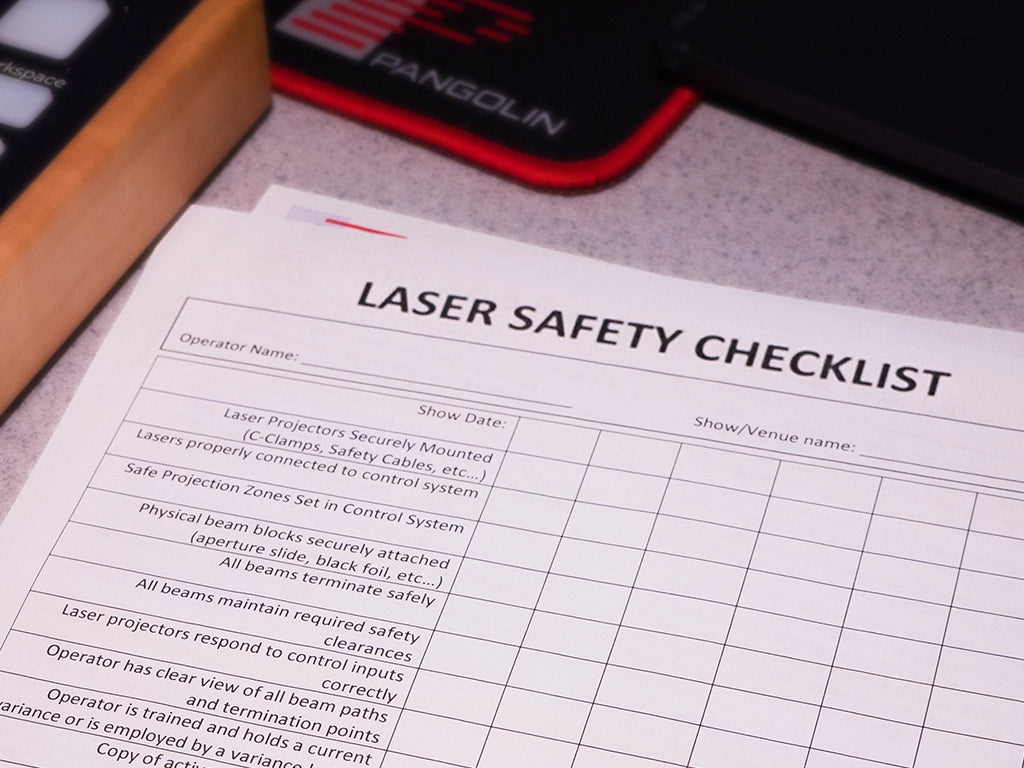
Laser Safety Checklist
Complete pre-operation safety checklist for laser operators.
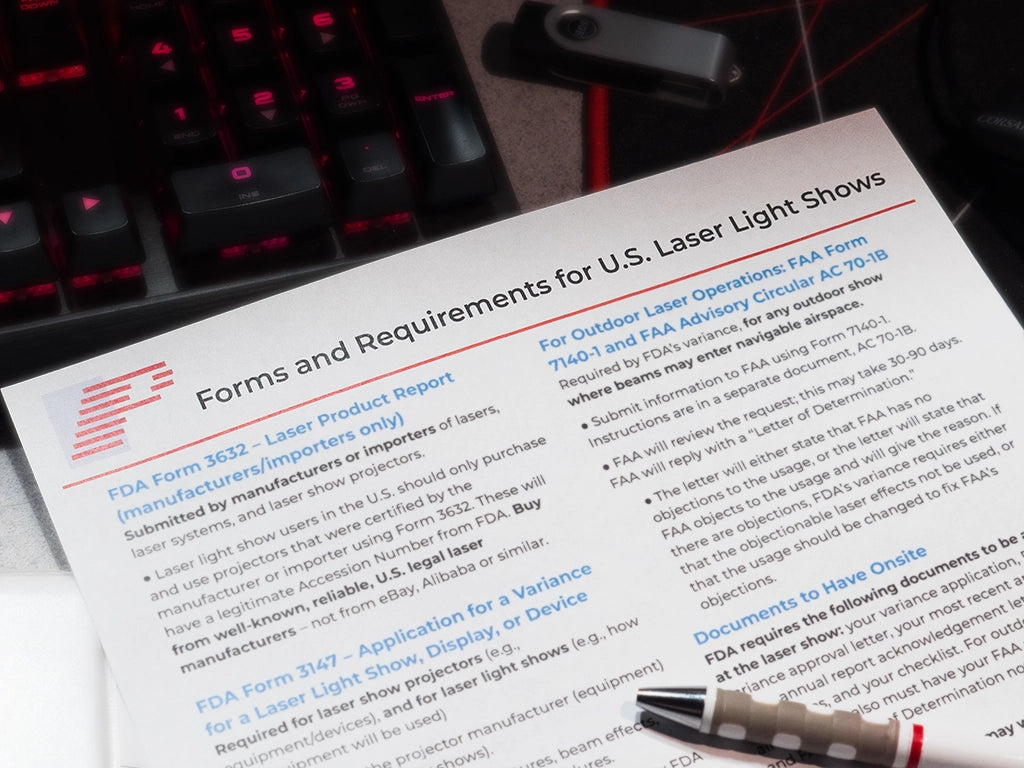
Laser Show Safety Overview
Comprehensive guide to laser classification and safety protocols.

Beam Attenuation Map (BAM)
Beam Attenuation Map (or BAM for short), is our patented standard safety feature inside all of Pangolin’s software.

