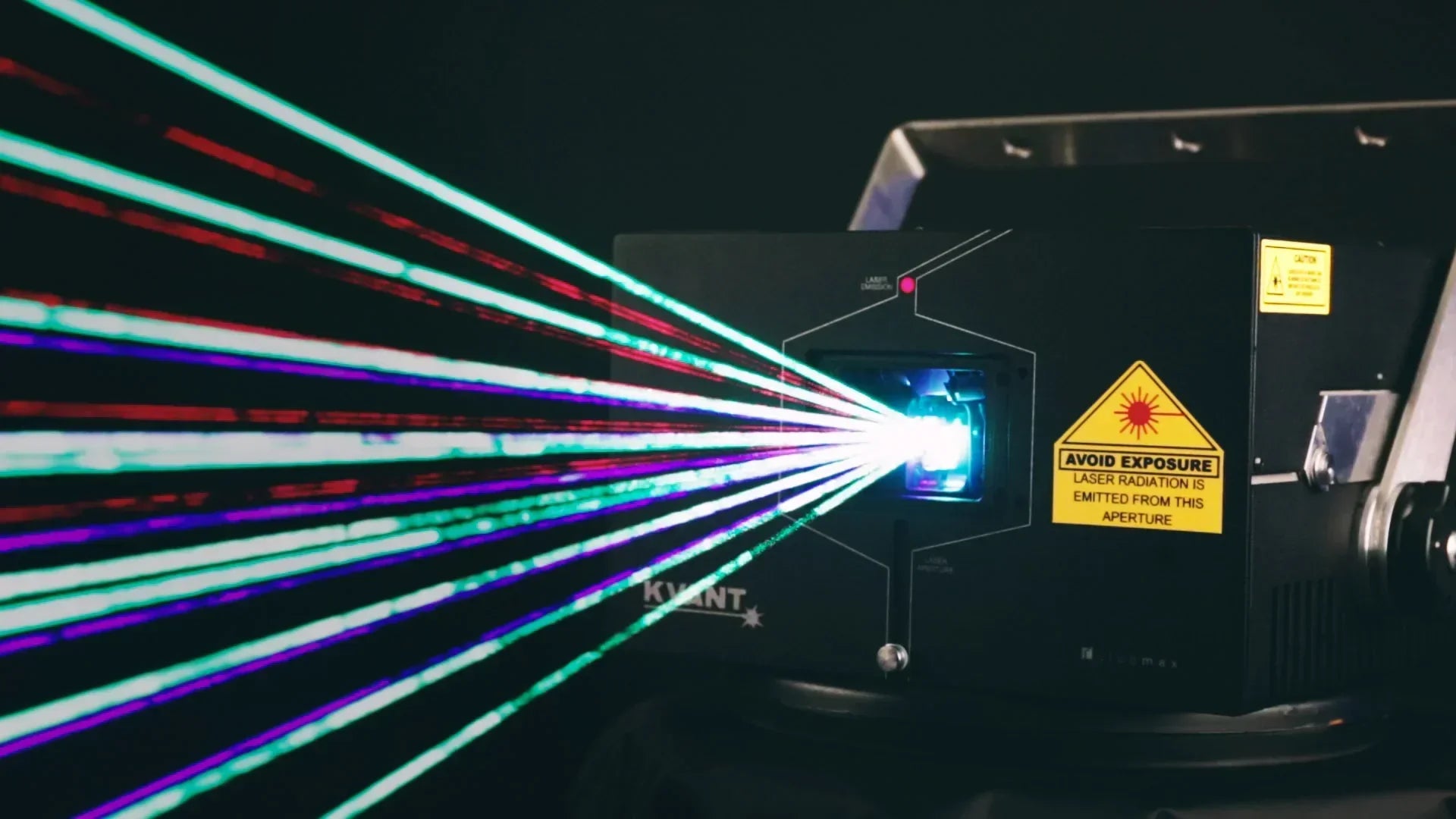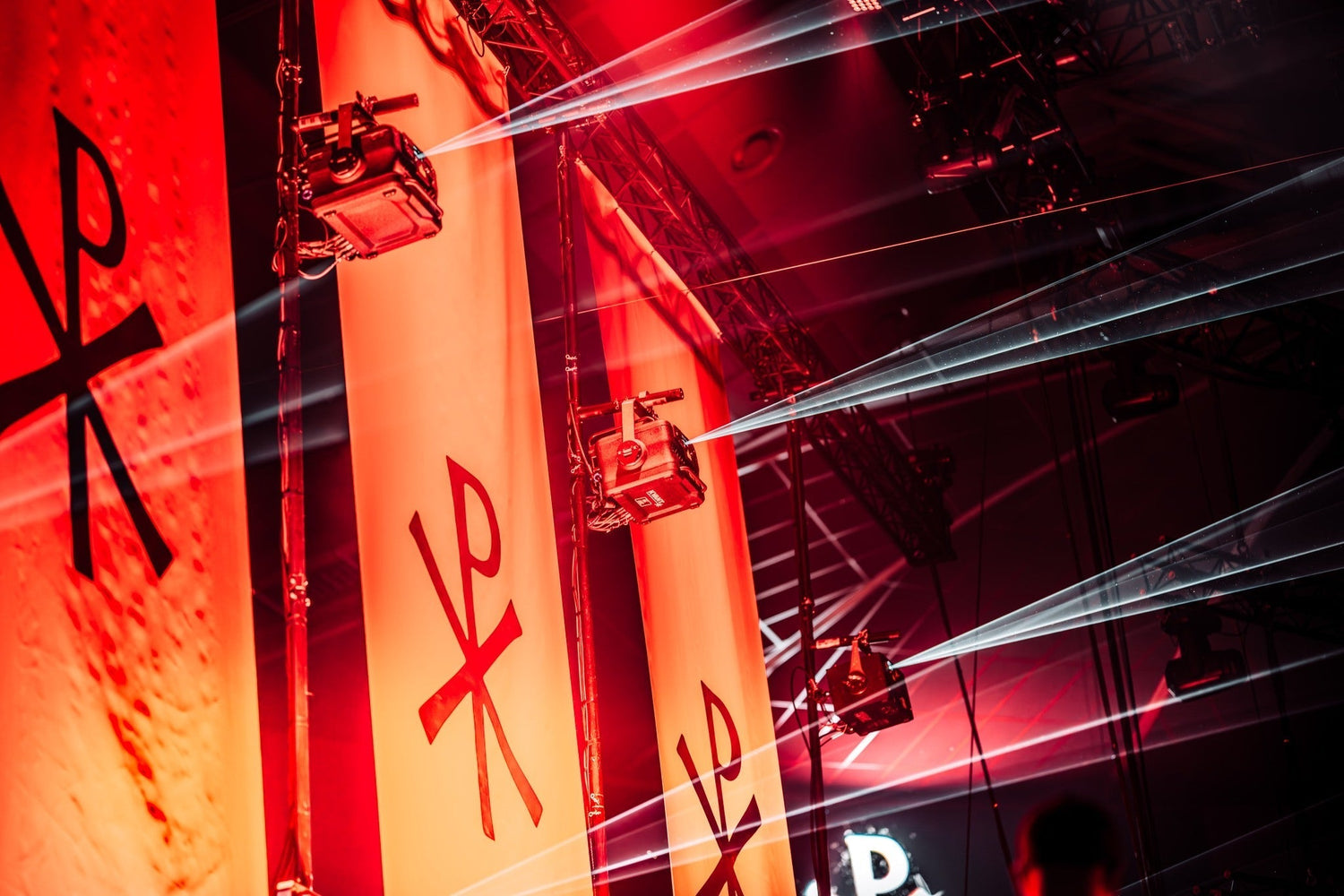
You know that feeling- when the first beam of light pierces a cloud of haze and the entire atmosphere shifts. In that second, you aren’t just a DJ, a technician, or an artist; you are the architect of an experience. Whether you’re looking to turn a dark basement into a sanctuary of light, or commanding the visual landscape of a massive festival stage, you deserve a tool that is as ambitious as your vision.
At Pangolin, we understand that buying a laser is a big investment. You’ve worked hard for your budget; let’s make sure it works hard for you. This guide is designed to cut through the technical noise and help you find the laser system that matches your stage, your budget, and your vision.
Find Your Laserist Profile
To find the right laser, we first have to find out who you are. We see three distinct types of laserists in our community.
The Emerging Professionals

You are the heartbeat of the local scene. Whether you’re transforming a backyard with light or headlining a local club, you care about impact vs effort. You don’t have the massive road crew, but you refuse to compromise on quality. You need a laser that is plug-and-play but professional; something that makes you look like an expert without the steep learning curve.
Overall you’re looking to feel confident in your gear, allowing you to focus on the crowd, not the cables. Reliability, portability, and wow factor are your goals.
The Road Warrior

You live in a world where every piece of your rig has to work, every time. Your gear gets tossed in trucks, covered in haze fluid residue, and pushed to its limits for several hours straight. You need ruggedness and control. You are likely running a lighting console and need a laser that speaks that language fluently while still ensuring the same level of audience safety; and you need all of these things in a package that’s easy to ship to each gig.
At the end of the day, you’re looking for peace of mind. You need to know that your equipment can survive the rigors of the road and keep up with every other part of your setup.
The Visionary

You use light to redefine physical space. Whether it’s a museum exhibit, art installation, or planetarium, you need precision and longevity. Your lasers might run for 12 hours a day, 365 days a year. You need a set it and forget it solution that stays sharp and vibrant for years.
As the visionary, you are creating a visual landmark, and your medium – light – must be as permanent as the structure it hits. Along with longevity, you’re looking for precision and the capability for more complex graphics, and cannot compromise on either.
Picking the “Best” Laser
The “best” laser is simply the one that fits your specific needs. If you work in a small club, you want small, lightweight lasers that are low in power to reduce safety issues in small environments, but that still look smooth and flicker free. If you work in a stadium, you need low divergence so your beam remains crisp all the way to the back row. Let’s break down our options.
The Unity Raw Series: Your First Step

The Unity RAW Series is good for both the hobbyist and the DJ, It’s the most cost-effective way to get genuine Pangolin technology. It’s a no-frills workhorse that gives you professional grade diodes without the touring grade price tag. With an integrated FB4 it’s a very versatile system and excellent entry-level choice while still retaining a professional level of safety, reliability, and build quality.
Best for: Small bars, home studios, and those just beginning their journey into professional laser shows.
The Unity Elite Pro IP65: The Professional Standard

A step up in build quality and internal components; The Unity Elite Pro Series features better scanning and a more robust housing without breaking the bank. It’s the bridge between “starting out” and “going pro”. Coming in a wide range of power levels and an IP65 rated housing, this line is able to handle anything you throw at it without breaking a sweat. This is a must for the touring pro who wants a cost-effective starting fleet.
Best for: Anything from touring production companies to open air stadiums that need a unit they can rely on night after night.
The KVANT Clubmax Series: The Gold Standard

Beautifully engineered, incredibly reliable, and coming in both standard and IP65 housing; The Clubmax Series holds its value better than almost anything else on the market. This system delivers the same high-performance output as the Elite Pro series while offering a selection of optional accessories that allow you to grow your toolkit with your technical needs. By supporting these accessories like motorized dichros, optical benches, and the industry standard PASS hardware, KVANT makes it possible to utilize specialized effects like crowd scanning* that would be otherwise impossible to achieve. It is the perfect investment for those ready to transition from entry-level gear to a world-class system that offers the best balance of power, features, and long term ROI.
Best for: Production companies, installations, high-end venues, and lighting designers looking to add visual depth
The KVANT Atom Series: The Powerhouse

The KVANT Atom Series offers incredible power-to-size ratios and the most advanced cooling systems available, and with the newly released Atom XR, this heavy hitter is easier than ever to ship and hang due to its updated compact housing. Featuring unrivaled divergence and guaranteed power output across the entire scanning range, the Atom series of laser ensures every effect is bold, bright, and unforgettable. The Atom series is fitted with advanced control options for easy integration into any professional rig.
Best for: Touring rigs, Festivals, Large-Scale Outdoor Events
Choosing Your Power Level
Once you’ve picked your system, you have to choose your power level, or “wattage”. Think of wattage not as "quality," but as "volume." Choosing wattage is the last step because it is dictated entirely by your environment: The size of the venue, the ambient light, and the presence of atmosphere.
The size of the venue is important because you want to be able to see a tight, clear beam all the way across the room and not have it “diverge”, or widen, to the point that it naturally dissipates. In an intimate club setting, a 1W to 5W system is often more than enough to create high-impact visuals without being overbearing; however, once you move into large-scale theaters, arenas, or outdoor festivals, you generally need 10W+ to ensure the beams remain “solid” and visible at the back of the house.
Likewise, understanding the amount of ambient light coming from the rest of your rig is crucial to choosing the correct wattage. Lasers are the “fine point pens” of the lighting world, and they can easily be drowned out by the “broad brushes” of LED video walls and moving head fixtures. If your show features massive LED screens running at full brightness, you’ll need a higher wattage laser to provide the necessary contrast to cut through the wash and remain visible to the audience.
And finally, beam visibility depends entirely on the haze in the air. If you’re chasing that “liquid sky” look– or fighting against ambient room lighting– crank up the haze to make those beams pop.
Here’s a handy chart to help explain what power you’ll need for your venue:
| Power Level |
Suggested Application |
| 1W-3W | Perfect for "dark" environments like home studios or small bars. In a hazy room, these feel massive and intimate. |
| 5W-10W | This is enough power to cut through the wash lights of a well hazed medium-sized club or wedding reception without being overwhelming. |
| 20W-30W | Large concert venues and theaters. This is where the light starts to feel tangible—you don't just see the beam; you feel the energy. |
| 40+ | Large festivals and outdoor sky-tracing. For competing with the largest LED walls, lighting rigs, and pyrotechnics. |
Overview of Other Laser Specifications
While we’ve covered the broad strokes of what you need to know to choose the right laser projector for your needs, there are many other factors you can look at while choosing your projector. Below is an overview of the most import of those specs, but if you would like to get into more of the nuts and bolts of how a laser functions, you can read our post “What is a Laser Light Show Projector?”.
Scanners:
Laser projectors have gone through several iterations of how to move the laser beam around. Modern laser projectors are equipped with scanners, which are mirrors mounted to very fast motors. These scanners draw content by moving the beam along the X and Y planes from point to point, like an Etch-A-Sketch. The most common scanner motor used today is the galvanometer, which works very similarly to a speaker. Better, faster galvos mean more complex content is able to be produced by the laser projector.
The industry standard for laser projector scanner systems, set by ILDA, is 30kpps (30,000 points-per-second) at 8°, with a maximum scan angle of 50°.
A projector capable of meeting this standard will be able to do nearly all beam show effects and simple graphics without any flicker. Budget laser projectors may fall below this standard in order to keep within certain price points. Very high-wattage units (60W+) may also fall below this standard, as they require larger mirrors that are harder to move as quickly.
Higher-quality laser systems equipped with scanners that are better than the standard are capable of larger, more complex content. Here is a video to help explain as well.
IP Rating:
Laser projectors usually come in two versions, no-IP rating, which means the unit is not sealed against ingress, or IP65, which means the unit is dust-tight and protected against jets of water.
Typically, IP65 rating comes standard on projectors starting at the mid range of power, around 10W. This is because lower wattage units will be used indoors where it is not needed, whereas high power units will be used outdoors where they are susceptible to the elements. For non-IP units, there are external coverings and enclosures available to allow the units to be utilized in inclement weather.
Heat Management:
Laser projectors generate a decent amount of heat when they are run. Usually, around 40% of a laser projector's size is made up of heat sink with rows of fans to help keep the units at a stable temperature. The majority of projectors on the market today use this method, though there are units utilizing heat pipe cooling, which reduces the size of the unit dramatically.
Weight:
Laser projectors can range in weight and size, usually directly correlating to their wattage. There are four basic, rough "weight classes" of projectors that most modern units fall under.
- Surprisingly Small (10lbs, 8"x6"x4") - 1W to 5W
- Lighting-fixture-eqsue (20-40lbs, 12"x10"x8") - 10W-40W
- Difficult-For-One-Person (60-80lbs, 20"x14"x10") - 40W-60W
- Required-Two-Person (100+lbs, 24"x16"x12") - 100W+
Knowing which weight class you will end up in is important for knowing what kind of work will go into hanging and transporting the units. Some units that may be dramatically lighter or heavier than their expected weight class. This can be due to advanced techniques like heat pipe cooling.
Color Balance:
Most projectors use Red, Green, and Blue (RGB) sources to create a full spectrum of color. To achieve the best white balance and color variety, a "good ratio" is typically:
- 20-30% Red (The largest beam)
- 30-40% Green (The most visible color to the human eye)
- 40-50% Blue (The cheapest source)
Higher quality units will often be closer to the "ideal" 33%/33%/33%, but as long as the unit has a good ratio, it can easily be tuned to output the desired range of colors.
Very specialty lasers will include Yellow or Orange laser sources, which increases the fidelity of color tuning between Red and Green. These units can produce an even more vibrant display of colors.
Here is a quick video going over the topic:
Conclusion
Choosing a laser isn’t just about technical specs; it’s about the moment the house lights go down and your vision takes over the room. Whether you’re looking for the approachable power of the Unity RAW, the rugged reliability of the Elite Pro, or the world-class precision of a KVANT, you are investing in a tool that will define your craft for years to come.
Your stage is waiting, and we’re here to help you light it up. Don’t leave your vision to chance. Browse our full collection of professional laser systems and find the perfect match for your next performance today.
Still not sure which category you fall into? Drop us a message, tell us about your vision, and let’s find your match today.